
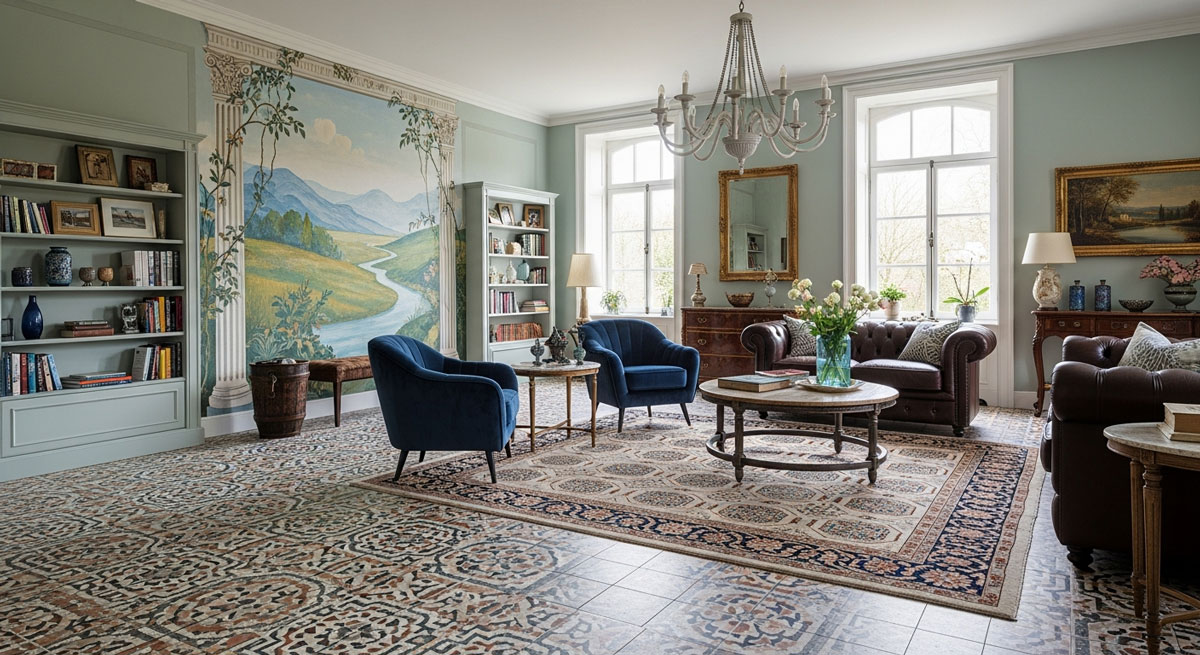
30 seconds summary
- Designing a timeless interior comes down to choosing finishes that age beautifully, and few options do that better than mosaic tiles paired with expert painting. Porcelain mosaic tiles add subtle texture, classic patterns, and durable elegance that work in everything from bathrooms and kitchens to entryways and feature walls.
- To keep the look enduring, stick to a restrained color palette, balanced grout tones, and simple layouts that won’t feel dated in a few years.
- Then, elevate the entire space with professional painting services: crisp edges, smooth wall finishes, and the right sheen level make tile work look intentional and high-end. Together, mosaics and quality paint create a clean, cohesive design that feels refined today, and still looks stylish years from now.
Designing a timeless interior is less about chasing trends and more about making deliberate choices that will still feel elegant years from now. Two of the most powerful tools for achieving that enduring look are mosaic tiles and high-quality paintwork. Mosaic tiles bring texture, pattern, and craftsmanship into a space, while professional painting services provide the clean foundation and refined finish that tie everything together. When used thoughtfully, these elements create interiors that feel layered, considered, and quietly luxurious, spaces that don’t date quickly because they’re built on balance, proportion, and quality.
What “timeless” really means in interior design
A timeless interior isn’t one that never changes; it’s one that adapts gracefully. It feels cohesive even as you swap out décor, furniture, or lighting over time. Timeless rooms often share a few traits: a restrained color palette, classic materials, strong craftsmanship, and design decisions grounded in function. You can still have personality; timeless does not mean bland. It simply means your statement pieces and finishes are chosen for longevity rather than novelty.
Mosaic tiles and paint are ideal for this approach because they sit at the core of the room’s architecture. Unlike accessories, they are not easily replaced. When you invest in tile and paint that are durable and visually balanced, you’re investing in the long-term identity of your home.
Why mosaic tiles belong in timeless interiors
Mosaic tiles have been used for centuries, from ancient baths and courtyards to contemporary kitchens and spas. That historical longevity is part of their appeal. They carry an immediate sense of craft, small pieces arranged in deliberate patterns, and they can be subtle or dramatic depending on color, finish, and layout.
A major reason mosaics feel timeless is their scale. Because the pattern repeats in small units, it doesn’t overpower the space as easily as a bold wallpaper might. A mosaic can read as texture from afar and detail up close, which is exactly what timeless design aims for: interest without chaos.
Timeless mosaic styles that age well
Some mosaic choices naturally resist dating:
- Monochrome mosaics: Whites, creams, greys, charcoals, or soft beiges in simple shapes (squares, hexagons) look refined and consistent.
- Subtle geometric patterns: Herringbone, basketweave, or small-scale chevrons add movement while staying classic.
- Natural stone mosaics: Marble, travertine, slate, and limestone offer organic variation. The key is restraint; let the stone be the feature, not the pattern.
- Glass mosaics in muted tones: Soft whites, pale greens, watery blues, and smoky greys evoke a spa-like calm.
- Porcelain mosaic tiles: Durable, water-resistant, and available in understated finishes that mimic stone, concrete, or matte ceramic, porcelain mosaics suit both classic and modern interiors without shouting for attention.
The goal is not to avoid patterns; it’s to choose a pattern that supports the room rather than dominating it. If you want your tile to remain relevant, keep the palette calm and prioritize texture, finish, and quality installation.
The role of paint in timeless design
Paint is the quiet hero of timeless interiors. It shapes how natural light behaves, defines architectural details, and establishes the emotional tone of a space. When paint is done well, smooth surfaces, crisp edges, and consistent sheen, it instantly elevates everything around it. When paint is done poorly, even expensive finishes can look unfinished.
Timeless color palettes often rely on neutrals, but that doesn’t mean “all white.” It means colors that play well with a wide range of materials and don’t rely on a specific trend cycle. Think warm whites, creamy off-whites, greige, soft taupe, gentle clay, pale sage, dusty blue, and broad, inky accents like charcoal or navy.
What makes professional painting services especially important is that a timeless interior depends on nuance. A slightly wrong undertone can make a room feel cold or muddy. A mismatched sheen can make walls look patchy. A poor cut line can cheapen the appearance of high-end tilework. Professional painters don’t just apply paint, they prepare surfaces, correct imperfections, and make the finish consistent, which is what gives the room its calm, lasting polish.
How mosaic tiles and paint complement each other
Mosaics and paint are at their best when they’re treated as partners. Mosaic tiles offer visual rhythm and texture; paint provides breathing room and cohesion. If both elements compete, the space can feel busy. If they harmonize, the interior feels curated.
Here’s how to create that harmony:
Let one element lead
Choose whether the tile or the paint is the primary visual feature. In many timeless spaces, mosaic tiles are used in focal zones, backsplashes, shower niches, and fireplace surrounds, while paint stays subtle and supportive. Alternatively, in a room with beautiful architectural trim, paint can take the lead while mosaics add quiet detail in smaller doses.
Match undertones, not just colors
A white tile may look “clean” in one light and “yellow” in another. Paint has the same issue. Timeless interiors succeed when undertones agree: warm with warm, cool with cool, or balanced neutrals with balanced neutrals. This is where professionals help immensely; experienced designers and painters test swatches against tile, grout, and lighting conditions before committing.
Use grout as a bridge
Grout is often overlooked, yet it has a huge impact. Matching grout makes mosaics feel calmer and more timeless because it reduces contrast and makes the surface read as texture. Contrasting grout can look graphic and modern, still potentially timeless, but easier to date if the contrast is extreme.
A safe, timeless strategy is a grout that sits one shade away from the tile, not ten shades away. It defines the mosaic without turning it into a loud pattern.
Timeless applications: where mosaics shine
Mosaic tiles can appear almost anywhere, but timeless interiors use them strategically.
Kitchen backsplash
A backsplash is one of the best places for mosaics because it’s visible yet contained. Timeless options include small subway-style mosaics, marble hexagons, or soft-toned glass mosaics. Keep the countertop and cabinetry relatively calm so the backsplash doesn’t fight for attention.
Pairing: If the tile has variation (like marble), choose a wall paint that is stable and simple, warm white or soft greige, so the stone’s character remains the star.
Bathroom walls and shower floors
Bathrooms naturally benefit from mosaics because they add slip resistance to floors and bring spa texture to walls. For timeless results, avoid overly trendy colors and pick finishes that feel natural: matte or lightly polished. Mosaics are ideal for shower niches and accent bands, but a full mosaic wall can be timeless too if the palette is restrained.
Pairing: Professional painters can select humidity-appropriate paints and ensure crisp transitions between painted drywall and tiled wet zones, making the bathroom feel tailored rather than pieced together.
Fireplace surround or hearth detail
A fireplace is a classic architectural focal point, which makes it a perfect canvas for timeless tile. A muted mosaic, stone, porcelain, or matte ceramic, adds texture and depth without overpowering the room. Keep the pattern simple and let the craftsmanship show.
Pairing: Paint the surrounding walls in a soft neutral and use a slightly deeper tone on built-ins or trim if you want subtle contrast.
Entryways and feature borders
A small mosaic moment in an entry, like a border in the floor or a decorative inset, can feel sophisticated and old-world in the best way. Because the area is small, even a richer material like marble mosaic can be used without overwhelming the design.
Pairing: Keep entry paint tones welcoming and forgiving, warm whites or light taupes, and emphasize durability with professional-grade finishes.
The case for professional painting services in a tile-focused interior
When mosaic tiles are installed, they create sharp lines, consistent geometry, and material richness. Paint has to meet that standard. Professional painters contribute in ways that matter, specifically when tile is involved:
Surface preparation and smoothness
Timeless interiors look calm because surfaces are smooth and consistent. Professionals patch, skim, sand, prime, and address texture issues. This matters especially in bathrooms and kitchens where tile lines highlight imperfections nearby.
Crisp transitions
Where tile ends, and paint begins, the transition should look intentional. Professionals know how to tape and cut cleanly, protect grout and tile edges, and use the right caulk lines so corners stay neat.
Correct paint systems
Bathrooms need mold- and moisture-resistant coatings. Kitchens need washable finishes that stand up to grease and wiping. Trim needs durable enamel-like coatings that resist scuffs. A professional chooses products that preserve the look over time, key to “timeless.”
Color and sheen expertise
A timeless interior often uses subtle, layered neutrals. Pros understand sheen behavior: matte hides imperfections but may mark; eggshell balances softness with wipeability; satin adds reflectivity. They help select finishes that look elegant and last.
Designing for longevity: practical strategies
A timeless interior also has to survive everyday life. Here are strategies that protect your investment:
Choose durable materials in high-traffic zones
If your kitchen is busy or your family bathroom gets heavy use, select mosaic materials that resist staining and wear. Porcelain mosaics are especially practical because they’re hardwearing and generally low-maintenance compared to more porous stones.
Keep boldness in removable elements
If you love dramatic color, use it in artwork, textiles, or furniture rather than permanent finishes. Let tile and paint be the enduring base. You can still create drama with deep accent walls or moody trim, but make sure it complements the fixed materials.
Use lighting to flatter finishes
Mosaic tiles catch light differently depending on finish, glass reflects, matte porcelain softens, and stone glows subtly. Paint shifts, too. Warm lighting tends to enhance cozy neutrals; cooler lighting can sharpen whites and greys. A timeless room considers lighting as part of the design, not an afterthought.
Maintain consistency across open spaces
If your home has an open-plan layout, a timeless design depends on continuity. You can vary mosaic accents from room to room, but keep the core paint palette consistent so everything feels connected. Even a small change, like the same warm white across main walls, creates a calm flow.
A sample timeless approach: putting it all together
Imagine a home where the main walls are painted a soft, warm off-white with a low-sheen finish. Trim and doors are a clean, durable satin in a slightly brighter white. In the kitchen, the backsplash is a subtle mosaic, small-format porcelain or stone-look porcelain in a gentle greige, paired with light countertops and classic hardware. The bathroom uses a small hex mosaic on the shower floor and a matching niche accent, while the rest of the walls remain painted in a moisture-resistant finish that echoes the same undertone as the kitchen. The fireplace surround has a modest mosaic texture, not a loud pattern, so furniture and art can evolve over time.
Nothing here screams a specific year or trend. Yet the home feels rich, layered, and intentional because the materials are high quality and the finishes are executed with care.
Conclusion
Timeless interiors come from decisions that value craftsmanship and balance over novelty. Mosaic tiles bring enduring beauty, texture, and architectural detail. Professional painting services provide the refined backdrop and flawless execution that make those tile choices feel integrated rather than isolated. Together, they create a home that looks composed today and continues to feel relevant years from now.
